Friday, April 29, 2016

Field Test: 24/7 Holster M Camera Bag


The so-called "wine country" of Northern California is one of my absolute favorite vacation spots—not only for the wine but also for the incredible scenery and picturesque towns found throughout the Napa and Sonoma valleys. There are photo opportunities at every turn, making it difficult sometimes to let go of my camera and just be in the moment. Nevertheless, I always carry my camera with me, so my most recent trip to Sonoma and Napa in late April of this year provided the perfect opportunity to field test a new camera bag.

The bag, called a Holster M is part of a new brand launched exclusively at Adorama. The 24/7 Traffic Collection was created for the urban photographer looking for infallible support and organization when shooting from location to location, according to the manufacturer. So the major selling points are durability and all-weather protection. Currently, the collection features six, lightweight, nylon bags, which you can view on Adorama's website.

Granted, I definitely wasn't in an urban environment, but the same rules apply for me. I much prefer to have a lightweight, smaller bag when vacationing. This forces me to really consider what camera equipment I actually will use (Am I really going to stop and set up a tripod everywhere I go?), and it surely gives my shoulders a break. There are many instances where I have chosen to make-do with a point-and-shoot. But for this trip, I knew I needed my Canon Rebel.

The Holster M is a medium-sized bag designed to hold a DSLR and a few accessories or everyday carry items, which suited my needs perfectly for a long weekend of wine tasting and exploring the countryside of Northern California. The bag features an adjustable, removable shoulder strap, a padded interior that holds a camera body and two lenses, secure storage for an extra memory card, an exterior pocket for your cell phone and other items, and a rain cover that stows neatly in an exterior pouch on the bottom of the bag. Other than trying out the rain cover for size, I didn't make use of it during my travels, but I can't say that I am disappointed in having sunny—albeit chilly—days for the duration of my trip.

What I can say is that I really enjoyed having this bag strapped across my body. Even when fully loaded, I hardly noticed its weight (the bag itself weighs less than one pound), and its relatively small size (11-5/8" long by 10-1/4" high by 4-7/8" wide) ensured that it never got in my way. When full, it easily carried my DSLR, a 50mm lens, a 28-80mm lens, a spare camera battery and charger, a lens brush pen, a padded camera strap, my iPhone, and a few personal items like allergy medication and a small tube of sunscreen. For me, it is the perfect camera bag for shorter trips because I don't like to be bogged down with a heavy bag full of camera equipment.

Editor's note: If you're curious how some of my photos turned out, click on over to my Flickr page.

Tuesday, April 19, 2016

The 'Cooke Look' Brings Murder To Life


When Director of Photography Julián Apezteguia, ADF (La Asociación de Autores de Fotografía Cinematográfica Argentina—Argentinian Society of Cinematographers) got the chance to work with Director Pablo Trapero for the second time, on the director's latest film El Clana dark story set in the 1980's about a family of kidnappers and murderers—they used a full range of Cooke Anamorphic/i lenses to give the film a “strong optical personality.” 

The lens package for the Goya Award-winning Best Foreign Film in the Spanish Language, winner of the Silver Lion at the Venice Film Festival, and Argentina's Oscar® submission included the Cooke Anamorphic/i 32mm, 40mm, 50mm, 75mm, and 100mm lenses, with Apezteguia primarily relying on the wider lenses. El Clan is the third feature film that Apezteguia has shot with Cooke lenses, and his first shooting anamorphic, using the Alexa XT in 4:3 sensor mode.


“Working with a director like Pablo Trapero is always very collaborative because he has a strong vision of the kind of film he wants to shoot, but he also needs to walk the path with his DP and Production Designer in order to find the way to bring this vision to life,” said Apezteguia. “With this process, there’s a lot of discussion about the technical and aesthetic aspects of the film, evaluating different options in order to get the desired result. This exchange of ideas goes all the way to the final grading of the film.”

Set in Buenos Aires the 1980’s, El Clan is the true story of the Puccio family who kidnapped four people and killed three, and how they live their lives through these events. Starring Guillermo Francella, Peter Lanzani, and Gastón Cocchiarale, the story demanded that the characters maintain a strong look.


“We decided to give the film a strong optical personality, and for this we chose Cooke Anamorphic lenses with an Alexa XT 4:3 camera,” added Apezteguia. “I feel the way the anamorphics render perspectives, and the [unique] way they twerk the out of focus part of the image—what’s behind the subject in focus—gives the Cooke Anamorphic/i lenses a unique look that is perfect for generating the feeling of a strange place or situation.”

Apezteguia relied on a host of other optical techniques, such as split field diopters, starting or finishing a shot with the image out of focus and even taking the lens out of the camera while recording. All of this helped build the optical personality.

Shot entirely on location, Apezteguia used tungsten fresnels, Kino Flos and HMI lights, both big (12k, 6k) and small (1.8k and 400w). In some specific instances, sodium or mercury streetlights were used.

“The main challenge I had to face was a series of sequences that Trapero wanted to shoot in a long Steadicam shot with no visible cuts. These were the kidnapping scenes (exteriors involving cars), the final sequence where one of the main characters jumps from a building trying to kill himself, and a long walk of the father from the family kitchen to the bathroom/dungeon where he keeps his victims. It’s always difficult to light a scene when the camera describes many different points of view without cutting, so I try to use the minimal quantity of fixtures possible, or use practicals so that they can be seen by the camera. Also coordinating the camera movement with the actors’ performances is part of the hard teamwork involved in the making of this film.”


Having used Cooke S4 lenses on two previous feature films, Habi, la extranjera and Dias de Pesca, plus many commercials using Cooke S5s, Apezteguia is very familiar with the distinctive look that Cooke lenses give cinematographers. “I like the texture they provide; they are sharp but not too crisp. I think this works very well with digital cinema cameras, giving you the chance to keep the cinematic feel working with an electronic image. They are also very kind to the actors’ faces.”

Apezteguia is so confident in Cooke lenses that they were chosen without testing against any other lenses. “We did extensive testing with the Cooke Anamorphic/i lenses so we knew how to get the exact look we wanted. One of the interesting things about working with anamorphic lenses is the particular perspective they provide that is inherent to the construction of a lens that squeezes the image that will be un-squeezed later. Cooke was the obvious choice because we got the perspective without losing definition...and with the plus of getting the ‘Cooke Look’ for our period film.”


Monday, February 1, 2016

The Best of 2015

By Cory Sekine-Pettite

As the staff of Markee continues to plan our 2016 editorial, we can't help but reflect on the articles we published last year. There were so many great projects covered and interesting perspectives revealed. So naturally, we wanted to share a few of our favorites with you again. Enjoy!

After Post Afterglow
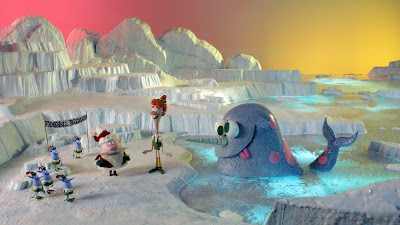
Elf: Buddy's Musical Christmas from Screen Novelties.

At the beginning of the year, we featured a collection of articles geared toward independent filmmakers that demonstrated the "Business of Film"—from what to do with dailies to cloud-based storage options to following your passions. If you've already read this collection, it is worth reviewing again, but if you didn't catch it at the beginning of last year, I encourage you to read it now. There are many great lessons to be learned.

Changing The Soundscape
Frank Morrone at work doing a mix at Technicolor Studios.

In the spring of last year, we interviewed MPSE President Frank Morrone about how sound editing and production has changed during his illustrious career. "The big changes now are just in workflow because our track counts are getting bigger, and our budgets are getting smaller, and our times are getting shorter. That’s been the biggest change,” says Morrone, who has mixed sound for high-profile TV shows and movies, including The Strain, Boss, Sleepy Hollow, and the Oscar-winning When We Were Kings.

Lighting Up The Hunger Games
Julianne Moore from The Hunger Games. (Photo: Murray Close)

Last summer, we had the chance to speak with DP Jo Willems SBC about his work on The Hunger Games franchise. It was a rare opportunity for us to take readers behind the camera of one of the most successful series of films in movie history. Willems and his crew described for us in detail all of the lighting tools, equipment, and techniques they used for The Hunger Games. Budding filmmakers will want to read this article throughly—and take notes. Willems and his team have a great deal of knowledge to share.

Monsters Under The Bed
A model bridge—a bigature—goes up in flames and flying debris for a scene in The Lone Ranger.

In a world where digital effects reign, there still are talented professionals creating practical effects for movies and even some television programs. Last fall, we profiled 32TEN Studios, which has worked on practical effects for such features as The Lone Ranger, Pacific Rim, and Tomorrowland. "As you can see, our practical elements are always used in conjunction with CG to create the imagery the production desires. But without the practical, the virtual would be less believable in this age of digital excitement on the screen," says 32TEN CEO Tim Partridge.

1,000 Feet To Victory
A student from PS 57 competing in the the annual Soapbox Derby in Akron, Ohio.

Last, but certainly not least, we recently featured a documentary film that followed the students and teachers from a New York school system (PS 57) as they traversed the country to compete in a soapbox derby. Photojournalist Steve Eisen followed the soapbox kids as they not only had a great time racing, but learned valuable lessons in science, math, engineering, and technology. It's a great story that you really must check out. “As a photojournalist, working for all of the major networks for more than 20 years, I’ve covered the darker side of neighborhoods such as the one the kids were growing up in,” Eisen notes. “And I’ve also covered how competitive sports can make a big difference in their lives."

Tuesday, December 1, 2015

Ancient History

By Tom Inglesby

Photo courtesy of Ben Weiner via Flickr.

‘Tis the season to be …cleaning out the garage in my case. An annual event that should, in all honesty, happen six or seven times a year, not just once. Our small section of Southern California has been experiencing a very unusual weather pattern this year with summer-like temperatures well into November and then a sudden return to “normal” temps (i.e., from 88 to 65 days and 65 to 35 nights) as we came up to December. Good weather to stay inside and clean, rearrange, reorder, and recycle. It’s also when memories come out of hiding.

When I left the sanctuary of being an audio producer at Encyclopedia Britannica Films to go out on my own as an indie, I already had been active sub-rosa—freelancing in my spare time. This was common knowledge at EBF since some of the work I did was for their producers, those not willing to stand in line waiting their turn for the studio time they needed. To keep a wall between the day job and the night one, I scarfed up a lot of used equipment to build up my own mixing studio in my basement (obviously, not in California where the term “basement” draws looks of bewilderment). The big recording studios would generally have time available for voice and ADR work at a reasonable rate for me in the hope that I’d bring the company’s work along. Going indie removed that leverage, but the audio community wasn’t that large and we helped each other when we could.

I mention those days because I keep coming across reminders whenever I start moving things around in the spare space in the garage. This time it was a four track, half-inch Ampex AG440 tape deck, packed away in a shipping carton, sans electronics. The 440 was the workhorse for studios in the 1970s, replacing the older AG300. Why I had the deck without the amps I still haven’t figured out.
In the bottom of the same crate were some of my infamous (in Chicago, in the 1960s) SFX tapes. At least that was what the boxes were labeled; the tapes themselves had long since deteriorated into Mylar ribbons and oxide dust and memories.

Once I had gotten my hands on the EBF Nagra IV-L portable recorder and a selection of mics, I started to record everything that made a sound. Growing up with radio as a constant companion, I was in awe of the great radio dramas and their story telling sounds. Music, sure, but the squeaking door, the growling engine, the horse clopping, those were the things that made you know what was happening without the visuals in films and the nascent TV shows. I wanted to learn the methods to making sounds that could be easily understood and add to the impact of the visuals in the films I worked on. I wanted to make radio shows with pictures! My most gratifying film work was on an Oscar-nominated short call Fire Mountain that had no VO, no music, just sound effects.

But all I have to show for all those years of recording is a box full of boxes full of dust. And the memories, of course. If you are still working in film, or have a collection of your work still in sprocket media, visual or sound, don’t waste another month, transfer it to digital, make copies, store them in Cheyenne Mountain (if you’re a government producer), buy a cloud and upload everything, do whatever you can to protect those hours, days, months, years of work. Or someday you’ll dread going into your garage to clean, knowing what you’ll find isn’t what you remember it to be.

Wednesday, November 4, 2015

Roots and Branches

FreeDigitalPhotos.net/franky242


By Tom Inglesby

The old adage “Everyone has to start somewhere” is both obvious and somewhat profound. In the digital age, however, the “where” sometimes gives the starter a false sense of accomplishment before it is earned. What I mean is, the Internet is filled with videos “produced” by people with cameras who become celebrities and instant filmmakers without the traditional training and experience. If anyone with a camera is a filmmaker, where will professional filmmakers work?

Ages ago, I learned the trade incrementally. Back then, we actually had apprenticeships, learning opportunities at the bottom of the stack. I had a background in radio and educational TV from my college days before I landed my first real filmmaking job, as an audio engineer—the sound guy—for Encyclopedia Britannica Films, the premier educational film producer. In the late 1960s, I developed their in-house recording studio and found myself going on locations to record everything from natural sounds to voices with a Nagra tape recorder.

By working with the producer and crew in the field, I was learning by observation. And being there when something went wrong—these were, after all, basically documentaries and we know that things go wrong in docs—gave me both a chance to see how to deal with problems and be available to help solve them. There is nothing scarier than having a respected producer yell at you, “Hey, kid, get on that second camera and get to work.” Especially when you’ve never touched an Arriflex before.
Back in the studio, we dubbed the voices and sound effects on magnetic film so the editor could match it to the visuals using a Moviola. It was primitive compared to today’s digital editing, precluding easy entry by those with interest—and often talent—who didn’t have access to the resources. And that, perhaps, is where the traditional methods let us down. Professionals came up through the ranks before getting their big chance; classic story line. But talented people found many doors closed if they didn’t go down the university path or union apprenticeship. Another old adage: “You need experience to get experience.”

The cost and ease of entry today marks a change, one that lets talent be the driver not experience. But ease of entry also builds, it seems, an uneasy relationship between professionals and wannabes. When we have film festivals honoring the value of shooting a feature with an iPhone, those who labor long hours with an F65 might feel a little dishonored.

Some companies in the business understand the need to get more opportunities for talent to come forth through education. VideoBlocks is one, sponsoring a College Film Contest. Filmmakers at the undergraduate and graduate level are eligible to win a first prize of $5,000 by sending in an original piece that incorporates VideoBlocks content. Four runner-up prizes of $1,000 will also be awarded, in addition to a $1,000 prize for the sponsoring professor of the first place winner—a total of $10,000 in cash prizes.

Cinematographer and director Arthur Albert will judge the contest. Albert has served as director of photography for Breaking Bad, ER, The Blacklist, Better Call Saul, and numerous other film and television hits. The contest is an initiative to support the artistic development of the next generation of directors, cinematographers, and producers.

As one with his roots in educational films, I applaud VideoBlocks for their efforts and look forward to seeing the results.

Thursday, October 1, 2015

Get Involved

Markee 2.0 magazine has joined with the CINDY Awards to connect with our mutual audience: film and video producers. If your niche is the educational, industrial, government, corporate, or other non-theatrical segment of our industry you may not be familiar with Markee 2.0. The magazine has been around for 30 years, in print and more recently digital format, addressing the theatrical film and video production market. In this digital age, the technology and techniques for that segment are just as applicable to the non-theatrical side.

Twenty or more years ago, that might not have been true. Equipment was large, expensive, and complex. “Movies” were shot on 35mm or 70mm film; educational filmmakers used 16mm. Today, everybody uses the same gear because it’s much less expensive and hundreds of times more capable. Yes, there are many more switches and buttons on a RED or BlackMagic camera than there were on an Arriflex 16 or Éclair, but that’s because they can do so much more in camera.

Since the gear and technology is common to all segments, why not adapt the techniques as well? That’s where we like to think Markee 2.0 can help. We bring the talent of major film and TV producers and production companies to you in our pages, regardless of the segment where you work. Markee 2.0 strives to inform and educate, entertain and clarify, just like you do in your medium.

If you are new to Markee 2.0—or a longtime reader—we’d like to ask a favor. Like you, we need information to be successful; we’d like you to share your experiences with us and our readers. There are two ways to do this: connect with us as a member of our Editorial Advisory Board or send us a note on what you are doing that could be of interest to our readers.

The Advisory Board lets us know what trends they see in the field where they work and what new and innovative ideas they have come across. It is open to practitioners and vendor representatives alike. Just e-mail me at tom@markeemagazine.com and let’s communicate.

If you have a project that has found a solution to a problem, that has adapted a technology or technique in a unique way, that has stretched a boundary or two, let us know and we’ll work with you to create an article for others to see and to gain the same benefits. Again, contact me for details and to let us know what you’ve been working on.

Already a CINDY winner? Let us know what you did that made that project so great. Others want to know.

Let Markee 2.0 be your two-way conduit for knowledge and expertise. That’s what we’ve been doing for 30 years.

Wednesday, September 2, 2015

Do You Show?

Tom Inglesby

Photo: Jack Moreh/Freerange Stock

Do you Show? I mean do you go to Trade Shows, like NAB or CineGear? Some industries are totally dependent on trade shows for getting the news out about innovations and upgrades to last year’s innovations. The construction field, for instance, has several major shows that draw tens of thousands of visitors; the electronics industry—or perhaps it’s better to call it industries—has a show that brings in more than 100,000 visitors each year.

One complaint about trade shows is that they are too far away. Doesn’t matter where they are held, it is too far away for those from half the country. New York? Long way from LA. LA? Too far to go for those in Atlanta. Las Vegas? “Well, we might make an exception for that show…”

Yes, Las Vegas draws better than almost any venue for a trade show, regardless of industry, and I suspect it’s not because it’s centrally located. It’s not. So what is the draw? If you have to ask, you’ve never been there.

In the days before near-universal Internet access, what the computer geeks call the “green screen days,”  there were few ways to find out what was new in your field. Weekly, monthly and even daily newsletters and magazines showed up in your mailbox or in-basket, festooned with ads and articles on what was available. A trip to the store, a few calls around, and you felt you were on top of it. Then, plan the trip to the annual trade show! Meet the vendors, network with your friends from all over the country, and at the end of the week, trek home with literally bags filled with literature.

Now? Turn on the computer, scan a few websites, and you have more information than most people can digest in a day. And this is every day. Data overload! It’s becoming a case where going to a trade show is a good way to get away from too much information. Never thought walking all day would be so relaxing….

And you get to actually touch stuff! That’s the real advantage of a trade show: you don’t just get information, you get tactile stimulation. Hold it, play with it, and discuss its features. Hard to do on the Internet when you are talking about “stuff.” No matter how many pictures you see, they don’t give you the same sense of understanding that you get looking through the viewfinder or turning on the light panel.

Markee 2.0 goes to the shows and we like to meet our readers there. But there are so many competing events. Where do you Show? We’d like to know more about your trade show plans. What shows are the most important to you and your segment of the market? How much time do you spend at a show? Where do you prefer to go—or prefer to not go—to attend a show? Why?

Wednesday, June 3, 2015

Location, Local, Location

By Tom Inglesby


The real estate sales mantra, “Location, Location, Location!” can fit nicely with the independent filmmaker’s mantra, “Keep It Cheap.” The majors can send scouts to find just the right location for a film or TV show based on the script writer’s concepts. It often seems that the big budget productions send crews and actors around the world looking for the perfect spot to resemble another spot that didn’t quite look like what it was supposed to look like, even though it was the actual spot being portrayed. Case in point: shooting the latest Pirates of the Caribbean… in Australia. Or Portland, Ore., sited for Boston in the TV show Leverage.

Okay, we recognize that several factors come into play when a studio looks for a site for a project that, according to the writer—or the author of the book that the project is based upon—is a particular city or area. For obvious reasons, Game of Thrones and The Hobbit are not going to be shot in Westeros and Middle Earth, respectively. The former travels to Northern Ireland, Spain, Morocco, Iceland, and Croatia while the multiple parts of the Lord of the Rings franchise have been shot in New Zealand and touched up in the UK.

But why choose these locations over others? Often that come down to money, or to put it in the term many producers prefer, incentives. Where will they offer the best tax breaks, local crew rebates, quickest and easiest permitting, and so forth? States compete to land those blockbusters-in-the-making and some literally go broke doing so. Not the whole state, but the film commission office, where the budgets can fluctuate wildly year-to-year and success is measured in tourist influx. Few locations, outside of LA, Las Vegas and NYC, have achieved this better than Albuquerque. The six-year run of Breaking Bad has made “Duke City” a choice vacation destination for fans to come and explore the sites familiar to them from the show. Car wash, anyone?

Scenery, of course, plays a role in the choices producers make. How exotic, how typical, how outlandish; the camera can catch it all in long shot and close up. Game of Thrones seems to pick shooting sites for the visuals, uncommon to most of the world, that convey an other-worldly—or at least other time—feeling. And once the fans find out where those scenes were shot, the tourist trade goes up. And find out they do with fan sites on the Internet hounding the production for inside information.

But those are big studio productions. What about the indie producer? Not likely to have a budget big enough for the film and location scouts, many turn to another mantra, that of Fiction Writing 101: “Write what you know.” Or in paraphrase: “Go where you know.” That can help in many ways, not the least of which is cutting travel costs. Shoot in your home town and you can go home every night. Well, maybe not. Check out the philosophy of John Putch in our June issue’s Spotlight feature. His low-budget shorts were shot in his hometown area, southern Pennsylvania, but still required cast and crew to stay in hotels and motels.

And that brings up another cost savings, if you have the chutzpah to work on it: trade outs. “No promises, but we can make (fill in name of motel, restaurant, car wash) famous by showing it in our film. Oh, in return, we sure could use (fill in trade: sleeping rooms, meals, car washes) on the house.”

Hey, it works for travel writers…

Monday, May 11, 2015

Review: Sony Vegas Pro 13

By B.I. Diamond

When Sony Vegas first emerged about 2004, its competitors in the Non-Linear Video editing (NLE) game were few. Today, however, Sony Vegas Pro 13 is way ahead of the small fry, and fits right in as one of the major players in the digital editing universe. Indeed, in the “how to book” Vegas 6 Revealed, written by Doug Shalin more than a decade ago, a line apropos then, and certainly applicable to today’s version reads: “Vegas is an incredible application, but it isn’t overwhelming.”

Many reviews of software get into the weeds, and that can be helpful if you like weeds, but personally I enjoy giving the application a spin and see how it feels – and Vegas Pro 13 handles beautifully. The program comes in several “flavors” – Vegas Pro Edit ($399.95) includes a package of plug-ins (effects) from FXHOME, the Pro connect iPAD app, as well as Vegas Pro. At $599.95, you can purchase Vegas Pro that comes with everything found in Edit, but also includes DVD Architect 6, the Vegas disc authoring title, a collection of NewBlue FX effects, and iZotope’s Nectar Elements dialog processing plug-in. If you’re into Dolby sound, the program also includes a Dolby digital encoder. The extras alone are valued at more than $250. The last and most versatile bundle, at $799.95, is the Vegas Pro Suite. Everything that’s in the first two versions, but you’ll also get Sound Forge Pro, Hitfilm 2 Ultimate, and royalty-free music tracks. With the plug-in collection and the other apps thrown in, you’ve saved yourself more than $800 by investing in the suite.

The program itself is user friendly, and if you started with the lower end version – Vegas’ Movie Studio platform, transitioning is a breeze. Still, if you’ve never used Vegas and tried other brands, you’ll find Sony’s software easy to use and learn. And, to help you get started, Sony provides a complete “show me how” option when the program opens.

Once opened, the design of the editing screen puts everything in front of you. Toolbars in Vegas Pro 13 are located below the timeline, and for those of us who’ve been around Vegas awhile it was a bit of “where is everything,” but it soon wears off. Users will find Importing media a snap and most media formats will easily import; and here’s a feature that some other timeline based digital editing apps may not include – import and export of projects files to and from among others, Adobe Premiere, Final Cut, and AVID.

Digital editors also will find a host of powerful features, such as the multi-camera editing tool (a bright spot for those of us who like “takes” from various angles); and the plug-in collection, the variety of which grows more enormous by the day. Indeed, in Vegas Pro you can chain 32 effects and apply them to an event, a track, or a project.

One of most useful tools included in Vegas Pro is the Loudness Meter. This is a response to legislation known as the Commercial Advertisement Loudness Mitigation (CALM) Act. Broadcasters who fail to adhere to the audio guidelines outlined in the act are subject to penalty. The act was a response to the problem with “television commercials” blaring at higher volumes than the show surrounding them. CALM required the volume of commercials and programs to be consistent. Hence, the introduction into Pro 13 of the loudness meter.*

One other tool that professionals will adore is proxy editing. You’re on the move, covering an incident for your television station; or shooting a film somewhere. With Vegas Pro 13, if you’re shooting XDCAM footage and have a Sony Wireless Adapter, you can transmit your media as a low-res proxy to your editor who massages your rough media into a stunning piece. Then, once you’re back in the editing suite, you can relink the proxy to your original hi-res media, and render it as the edited piece.

In Vega Pro 13, you also can archive your work, definitely an advantage when you need something you shot a week or a year ago. And unlike a project where some things change as you make alterations – an archived file takes everything with it and files it away as a single file in a single location.

By the way, output is simple. There are customizable templates allowing you to render your output in an array of formats such as WMV, MP4, AVI, etc. There also is a YouTube upload option.

Finally, there is the Vegas Pro Connect app. This gives editors using iPADs the opportunity to share video and a host of other aspects of their project with other users, or clientele. Its setup is not difficult and its usefulness is extensive.

Vegas Pro has been around for years now, and as with every piece of software, it has its great, good, and poor points. Having been a proponent of the Sony software for a decade or more, the great and the good definitely outweighs the negative. Hence, if you’re looking for a moderately priced NLE timeline based digital video editor that does everything “but the dishes,” check out Vegas Pro; it provides the power and the ease (that user-friendly thing we hear about) that others can’t touch. Try before you buy and undoubtedly, you’ll find that Shalin was correct when, a decade ago, he wrote: “Vegas is an incredible application.”

Product comparisons available at:
http://www.sonycreativesoftware.com/vegaspro/compareVegas Pro 13 (tested): Purchase $599.95; Upgrade from Vegas Pro 12 $249.95
Vegas Pro 13 Edit: Purchase $399.95; Upgrade $199.95
Vegas Pro 13 Suite: Purchase $799.95; Upgrade $449.95
Trial versions available

Technical Specifications:Operating System: Windows 7, 8 or 8.1 (64-bit)
Minimum CPU: 2GHz (multicore or multiprocessor CPU recommended for HD or stereoscopic 3D; 8 cores recommended for 4K)
Minimum RAM: 4GB (8GB recommended; 16GB recommended for 4K)
Minimum Hard Drive: 1GB required for program installation
Graphics Card: GPU-acceleration requires OpenCL supported NVIDIA, AMD/ATI or Intel GPU with 512MB memory; 1GB for 4K

*If you’re interested in examining the standards set by the Advanced Television Committee regarding audio, see the following: ATSC Recommended Practice: Techniques for Establishing and Maintaining Audio Loudness for Digital Television. (A/85:2013) Doc. A/85:2013. 12 March 2013.

B.I. Diamond is a professor at Georgia State University, and contributor to Markee 2.0.

Wednesday, April 1, 2015

Tab, You’re It

By Tom Inglesby


If you are reading this on a tablet or a smartphone, you are among the majority. Not that we’ve done a survey or anything, it’s just the idea that busy people, unless they are tied to a desk—like us writers—are more likely to use a portable device for their communications and information. At work on a set, a far-flung location, or post-production studio means you don’t have the luxury of a 20-inch monitor and tower case computer. Not that you need one; today’s laptops are as powerful—often more powerful—than a desktop and a lot more portable.

But the true portable computer has become the tablet. What Apple tossed into the mix, the iPad, has spawned a new generation of flat screens-with-computing that come in so many sizes there is one for every possible pocket. As tablets get bigger, smartphones follow suit. The Samsung Galaxy Note, my phone of choice, has a screen bigger than some tablets. Makes these old eyes suffer less strain when reading texts—as one pre-teen said, “Who calls on a phone anymore?”—and offers a reasonable alternative to the tablet for daily, on-the-go communications and information gathering.

Years ago, when the iPad was the supposedly only game in town for tablets, my wife was in China and bought me an “iPad” on a Shanghai street corner. Her thinking was, iPads are assembled in China so seconds and rejects easily find their way into the black market. And the price, about $125 after currency conversion, was much better than the $600-plus for the U.S. marketed version. And it had the Apple logo on the back! What could go wrong?

Fired up, it turned out to be an Android OS tablet with minimal memory and almost no apps available. And, of course, no service, warranty or support in the U.S. (probably none in China, either). So much for bargain hunting.

Today, I have tablets of various screen sizes to choose from depending on the reason I’m carrying one. Trade show? Take the iPad—a real one—to show Markee digital edition to exhibitors. Conference? Go with the Samsung Galaxy Tab. The 7-inch screen is fine and the tablet fits in a pocket instead of a case. Mixing OS is no longer a problem as almost every app is replicated on iOS and ‘Droid.

There comes a time when the technology we employ dictates the way we do business. The printing press allowed the newspaper industry to develop; radio begot television. The Internet has caused any number of changes in how we approach communications. Markee, like every successful magazine, has long been part of that technological advance with a digital edition you can read on a tablet—or smartphone—and a website, blog, Facebook pages, Twitter and every possible social media method known to Western civilization. Some of which this old guy never heard of before!

To paraphrase an old quotation, “The handwriting is on the tablet.” Markee is moving its magazine to a fully digital edition in 2015; the last paper printed version, Winter 2014-15, will soon become a collector’s item, I’m sure. If you attend NAB this year, be sure to pick up a copy and preserve it for generations to come.

Monday, January 5, 2015

Post Post

By Tom Inglesby

Photo by hyena reality
We sometimes get caught up in the WOW factor in this business. And by “business” I mean yours, film making, and ours, writing about film making. When we see the latest whiz-bang animation or VFX or whatever, we get that “insider” feeling that we are the cool cats who know what is going on and can explain it to the outsiders. But we also are the ones who get a little twinkle in our eyes and a “golly whiz” in our throats when we really don’t know what is going on.

After all, there are so many aspects to the film and video production business that few people even in the business can know it all. That wasn’t the case a few generations ago. The indie filmmaker who did it all—conceptualizing, writing, shooting, cutting, and even release printing his or her work—wasn’t uncommon at some pretty high levels. Some even did the acting, directing, and marketing. This was especially true at the industrial, educational, and documentary levels of the business. Without the deep pockets of the studios, indie producers had to try, if not do, everything.

We’ve come full circle. The current crop of small, high-quality cameras, lights and audio equipment makes it a lot easier for a creative individual to attempt a full-scale assault on the entertainment industry. Fall back: YouTube!

Software and computers are replacing cameras and lights for filming, from animation and special effects to green screen and dubbing. All the editing functions that we used to do with a grease pencil on film are done with a mouse on a desktop.

One thing remains consistent, however: value. The end product, regardless of cost to produce, is valuable to the producer, the crew, and the distributor. Their work is wrapped up in what might be a single hard drive worth of space or a hundred terabytes of online storage. This post post-production requirement is rarely thought of in advance. Hey, archiving isn’t sexy; storage is just another cost center.

And then along comes Sony and the Hackers, a title for a film that no one saw coming, it seems. Where and how you store your work during and throughout the lifecycle of a project can be critical in how you monetize that project. Security is just as important as cost up front and space in the backroom. Best to consider that before you spend all the funding on pretty, new camera gear.

Wednesday, November 12, 2014

Allied Pixel Produces Sexual Assault Education Video


Allied Pixel, a digital studio that specializes in online video, social media and web development, has produced an educational video on sexual assault for colleges and universities. It is part of Allied Pixel’s Higher Education program. 

The video addresses a growing problem on college campuses through frank conversation about what is and what isn’t acceptable behavior – and strategies to avoid dangerous situations. Customized versions of the video are being rolled out to colleges nationally. 

“This is part of our ongoing relationship with partner schools,” says Allied Pixel’s Bill Haley. “We want to help them change attitudes and behaviors for the better.” 

More information about Allied Pixel’s Higher Education program is at www.alliedpixel.com/education.


Thursday, October 16, 2014

Will a Non-Neutral Net End Up Looking Like Cable TV?

By William Mainguy

Photo by Waag Society
Net neutrality—the principle that all data is served over the Internet equally, has rapidly become a contentious issue in the United States and on the world stage. The Federal Communications Commission, backed by the ISPs, have proposed a two-tier concept whereby a new “fast” lane of Internet connectivity would be provided, for an increased fee, in addition to the current Internet service offering. The proposal is being viewed by the public as a thinly veiled strategy for ISPs to begin regulating and "throttling" bandwidth for select businesses of their choice depending on what they’re transferring and who is using it amongst other criteria. In effect, this new regulation could allow ISPs to reduce the speed of, for example, Netflix’s video service to force the company to pay for the “faster” pipeline. In fact, some evidence of this has already occurred.

Because video has the heaviest payload on the Internet today, the end of net-neutrality possesses a serious threat to the heart of the film industry and independent filmmakers alike.

Originally, the traditional film distribution model was convoluted, restrictive and reserved for only a fraction of elite filmmakers who manage to succeed in it. The Internet, like in all of the other entertainment industries, has been the great equalizer, providing creators of any background with a free and open marketplace to reach their audiences directly. The advent of self-distribution and streaming has democratized video distribution—thousands of films that would have never seen the light of the day are now enjoyed by viewers. The end of net-neutrality would reinstate a classist supply of video content, whereby only the owners of top content will be able to afford a model where they can pay the ISPs' “fast” lane rates.

And we’re not just talking content—the innovative culture of new startups and companies that strive to offer new services also will be at risk. Larger corporations may be able to weather the storm by making deals with the ISPs—just like Netflix has with Comcast. However, new entrants that have ideas on how to disrupt and improve the industry may be presented with an insurmountable barrier to entry—effectively ruling out any form of new competition. Both content creators and viewers lose, facing no innovation in business model or experience.

Currently, we are enjoying an unprecedented era in which we can effectively watch whatever we want, whenever we want. The Internet has meant that we are no longer stuck with limited programming bundles and content from only a limited number of suppliers. It costs a fraction of the price of cable to do so and that is the source of the ISPs' fear—continuous loss of revenue and control. But this innovation is the fruits of a great Internet economy based on competition within a free and equal marketplace. This is what we must protect.

Simply put, the Internet should not be seen as the telecoms' business model. They are middlemen that should be providing broadband Internet as a “common carrier service,” regardless of what we use it for—just like other utilities we use.

About the author:
William Mainguy is CEO & Co-Founder of Reelhouse, an online distribution platform that enables independent filmmakers, studios, film distributors, and traditional retail outlets to market and sell movies directly to viewers.

Sunday, October 5, 2014

I Am A Camera*

By Tom Inglesby


Since the earliest days of photography, one of the driving forces has been to make the camera smaller, easier to use, and with more capabilities. The camera obscura was a walk-in room with a pinhole at one end; the Kodak Brownie added film and a lens in a handheld version. Both were simple, but the latter created a world filled with photographers. Everyone was taking pictures.

Motion in photography came about long after still pictures. Cameras to record the moving images were heavy, mounted on sturdy equipment stands and minimally movable themselves. Scenes had to be blocked out carefully so the cameras could be positioned well in advance—hopefully out of sight of one another. By the 1940s, handheld cinema cameras were following the action on battlefields and sports fields, producing images to be seen by millions. 

Today’s cine cameras can fit in a shirt pocket, produce digital output at the highest resolution the delivery systems can reproduce. And, once again, everyone is taking pictures—only motion pictures this time.

In keeping with the “smaller, smaller, smallest” trend in everything electronic, the ubiquitous cell phone has become a cine camera. And where there is photography, there are competitions. We are a competitive industry, awards being the proof that what we did, what we created, is accepted by our peers as well as the general public.

Which brings us to the concept of the mobile film festival. Or more accurately, film festivals. They are popping up all over the world, it seems. But let’s focus on the celebration of cell phone cinema right here in the USA, the International Mobil Film Festival being held in April, 2015 in San Diego. 

The driving force behind the festival is Susan Botello of S. Botello Productions. She is forming a mobile film resource center for the world to access. “A strong emphasis is on connecting the world of filmmaking to mobile filmmakers around the globe via new technological advances with mobile phone cameras,” she explains. “The purpose of our film festival is not only to create interest and spark creativity in people of all ages with limited income or resources, but to actually inspire creative filmmakers to live up to their potential and realize the opportunity to fulfill their dream. The International Mobil Film Festival is for everyone! All ages welcome.”

The 2015 event will be the fourth and expects to entertain a record number of entries. According to Botello, “Our mobile media film festival will take place in San Diego, where we’ll have a live event venue in which we feature the films competing, film festival partners from around the globe, our global Community Stories program and much more. And all the films will have been shot on mobile phones!”

The festival isn’t the only place for artistic release using a cell phone. Botello also launched Mobile Film Television (MFTV), an online mobile film distribution network back in 2013. The mobile television channel, while still in its infancy, is a venue for mobile filmmakers to distribute their mobile phone films via a channel that will play their short films on just about any device or screen with web access.

“This new medium is ready for filmmakers,” Botello exclaims. “Films will be available around the world from filmmakers around the world. The films can be displayed on screens of any size. We’ll be showcasing them at the International Mobil Film Festival on big screens as well.”

The distribution network is separate from the film festival, although both require that all films are shot on mobile phones. Films for MFTV do not have to be submitted to the film festival and the duration of the films differ. As with any other distribution company, a filmmaker will need to enter into a distribution contract and release their films for distribution by MFTV. There is no limit to how many films a filmmaker can submit for distribution or how many films a particular filmmaker or production company may submit or be distributed.

“The criteria for films is simple, it is strictly for films shot with mobile phones,” says Botello. “We are not seeking just films that are traditionally cinematic. We hope to include quality experimental films from mobile filmmakers. Throughout both the festival and the MFTV channel, production values are important. We want these to be quality films, just shot on mobile phones.”

So if you have a cell phone filled with motion pictures, apply your professional talents to making them into a true “film” and enter the contest. The information is available online, of course, at www.mobilfilmfestival.com. See you—and your cell phone film—in San Diego April 25 and 26, 2015.

I Am A Camera, 1955, Henry Cornelius, director.

Thursday, September 18, 2014

Apple Through The Ages

Many of us in the film and TV production industries – if not all of us – use Apple products at work. You likely use them at home as well. Through the years, Apple has managed to create a fan base like no other company in history. Their annual product announcements are much-anticipated events that attract millions of online viewers. This past week, on September 9, Apple announced the redesigned iPhone 6 (now in 2 sizes) and the new Apple Watch.

Following that event, presentation software developer Prezi produced a short video on the history of some of Apple's most influential product developments, including the first home PC with a graphical user interface and mouse, and the iPhone. Have a look:


Wednesday, August 13, 2014

Robin Williams: 1951-2014


 By Tom Inglesby

When a legend dies, people dig into their memory vaults to find something to say, something to recall that might be comforting to others, something that puts them into the picture with the legend. Robin Williams, a true legend in many media, died on Aug. 11, 2014 at the age of 63.

I wish I could say I knew him; I didn’t. I saw him in a live performance once, in the 1980s. I saw his work in several films, some more memorable than others, at least to me. In reading the reviews and comments online, his best films were apparently those I never saw: Mrs. Doubtfire, Good Will Hunting, Dead Poets Society.

What I remember Williams for was some of the work that is easily overlooked by the professional critics and commentators doing their best to eulogize him. Remember him in Popeye? How about Awakenings? The former showed his talent for facial comedy, the rubber face approach; the latter gave him the chance to be both calm and excited, a range that he pulled off admirably. Not great work but memorable.

His signature shout-out of “Good Morning, Vietnam!” will stick with you forever if you ever served in that country. I was there months before Adrian Cronauer, who Williams played—somewhat loosely I understand—started on "Dawn Busters" on Armed Forces Radio, but the film was a strong reminder of those days.

Williams hit another peak, in my mind, when he transitioned to killer in Insomnia. Here he played so far against type that no one gave him a thought as the villain; we expected him to end up another victim. Come on, this was Robin Williams, not Jack Nicholson in The Shining. How can Peter Pan be a villain?

His acting, however, was only part of the man’s legacy. He won Grammy Awards five times for Best Comedy, Best Children’s, and Best Spoken Comedy recordings. I envied him since those were the categories where I had nominations—without a win—in earlier times. But he deserved the awards, just as he deserves the accolades being heaped on him after his death.

What Robin Williams didn’t deserve is to get so depressed that he considered suicide. He has four films in post and just finished a TV series, The Crazy Ones. Why would such a respected and successful man be depressed? And why didn’t he listen to his own words: in World's Greatest Dad, Williams’ character, Lance Clayton, said, "If you're that depressed, reach out to someone. And remember: Suicide is a permanent solution to temporary problems."

Did he reach out and find no one there? Will we ever know?

Robin Williams reportedly once said that if he finds himself in Heaven one day, he hopes there will be laughter. If not, he’ll be providing it now.

Our sincerest condolences go out to his family, friends, those who have worked with him in the industry and his fans around the world who will continue to honor his memory—through laughter on Earth.

Thursday, August 7, 2014

Gasket Studios Animates Film Noir With Sponsor Reel For Provincetown Film Festival

This past June, the city of Provincetown, Mass., held its 16th Annual Provincetown Film Festival (PFF), which is dedicated to showcasing new achievements in film and honoring the work of acclaimed and emerging directors, producers and actors. This year’s theme: Film Noir.

Gasket Studios, a Minneapolis-based design, animation and VFX company, was tasked with producing a stylized 3D-animated sponsor reel for the festival, which they pulled off in spades. Written and directed by Alex Boatman, The Oystercatcher Catcher, was inspired by the film noir theme as well as Pecker, the official PFF mascot. The delightful animated story reveals that Pecker is no ordinary fedora-wearing private-eye. He is actually a thief.

“Gasket took this year’s sponsor reel to imaginative new heights,” says Andrew Peterson, PFF director of production. “Not only does it embody the caliber of creativity and storytelling our festival celebrates, but also it’s a cleverly fun ode to this year’s film noir theme, which we chose to honor the late Evan Lawson, former president of the Provincetown Film Society Board of Directors, who was a huge fan of the genre.”

“The client directive was specific about staying true to the original Pecker illustration in the festival promotions, as well as portraying his irreverent personality,” remarks Boatman. “Otherwise, they were very open to our ideas and encouraging with their feedback, which allowed us to focus our time on refining the artistic whole of the film.”

Boatman first researched the tradition of film noir – vintage and modern – to create a reference library of images and videos for inspiration. After exploring common themes like jealousy, adultery and betrayal, she settled on the genre’s most iconic and powerful storytelling device: the detective.
Aspiring to translate the instantly recognizable aesthetics of film noir though animation, she imagined a painterly 3D world. A restrained color palette, which was desaturated to virtually black and white, maintains the film’s vintage look. Heightening the mystery and atmosphere, Gasket employed digital lighting and shadows to create fog, mist, street and sign lighting. Feather-textured vignettes enhance the dark, grungy mood of the story’s bird-infested world.

Sit back. Relax. And enjoy.


The Oystercatcher Catcher, Provincetown Film Festival 2014 sponsor reel from Gasket Studios on Vimeo.


The Oystercatcher Catcher created by Gasket Studios
Director: Alex Boatman
Creative Director: Greg Shultz
Producer: Eric Mueller
Technical Director: Justin Greiner
Look Artist: Tiffany Borchardt
Animation: Brad Jacobson
Modeling: Brad Jacobson, John Zilka
Rigging: Alex Boatman, Justin Greiner
Simulation: John Zilka
Additional Backgrounds: Jenna Workman

Music by Ken Brahmstedt
Sound Design and Mix by Dan Kramer

Mixed at BWN Music

Wednesday, July 9, 2014

Music in the Air

By Tom Inglesby

While I cut my cinema teeth on a Mitchel BNC, Arriflex 16 and Éclair in the 1960s, I found my niche in audio. I was the “sound guy” on dozens of educational and documentary films, did studio recording and mixing for soundtracks, and generally made noise with a variety of Ampex, Studer, Nagra, and Tascam tape recorders. We dubbed tape-to-film and mixed on a vertical Moviola. It was, to be sure, a primitive way of doing music and voice over for film compared to today’s digital wonderland.

I came away from those halcyon days with two things: awards and memories. The memories, of course, are good and bad: Long nights in the studio, but the joy of watching your project come to life; take after take versus the pride of having gotten just the right take, regardless of how many it took. Standing on the side of a volcano to get SFX while your boots are melting compared to hearing the announcement the film those effect went into was up for an Oscar. Good and bad.

When you are the crew, not the writer or director, most of the awards your films win don’t end up on your shelf. All I have to show for the 37 festival awards won by films I worked on are clippings. But I still have those clippings more than 40 years later.

I laid a lot of SFX tracks, and we’d use local studio musicians when we could afford it; we were also lucky to have some great musicians on staff, as well. I still have tapes – probably turned to oxide dust and acetate by now – of music and effects we cut late into the night, after our day jobs were over.

And not all the excitement was from the music. We were in Chicago’s Boulevard Recording Studios the night of the protests at the Democratic Convention in 1968 and had to stop work due to the sirens outside. Tear gas even seeped into the control room as the police chased “hippies” through the streets.

Although my memories of studio sessions are clear, I must admit we used a lot of stock music, too. Most educational films didn’t have the budget for original music and if they did, it was for a major theme, not for stings and bridges. But stock libraries had it all, conveniently arranged, labeled and with rights.

Considering the vast music libraries now being used for everything from YouTube to theatrical features, it’s fitting that an award be created to honor those who best utilize this resource. Markee 2.0 is privileged to be the named sponsor of just such an award for best use of stock music in a film or video. The Markee 2.0 Magazine Award will join the list of honors presented by the CINDY Awards (“Cinema in Industry”) in the coming year.

CINDY began in 1959 as an industrial film awards event. They currently present 14 different CINDY Award events each year honoring theatrical, broadcast, non broadcast and interactive media professionals around the globe. In 2015, the Markee 2.0 Magazine Award for innovation in the use of stock music will take its place with the others. As the rules and procedures are finalized, you’ll find more information on the Markee website and in our eNewsletter.

If you use stock music, or if you know of an innovative user of music libraries, get ready to fill out a nomination form and join our little party. I can almost promise: no tear gas!

Thursday, June 5, 2014

Three? Four? Eight? What’s next?


TNDV used Red Epic 4K cameras for live concert performances for the ABC series, 'Nashville.'

By Tom Inglesby

Trends these days seem to have numbers attached. There is 3D, 4K and now even 8K. As hard as it is to keep track of the alphabet soup of HD, SD, SSD, and who knows what else, throw in the many numbers we have to be aware of and things get complicated.

Markee 2.0 Editorial Advisory Board member Nic Dugger sees this as a challenge, but not in the way you might think. His company, TNDV, became one of the first mobile production companies with an SD/HD/3D truck when Aspiration first appeared in 2011. However, Dugger quickly recognized that the 3D element would play a nominal role in his productions at best. As the broadcast and production industry awaits the arrival of the next-generation format, he is helping his clients through creative, customized solutions that leverage current technologies with cost-effective packages.

“The 4K message was inescapable at NAB, and for good reason as the technology itself has arrived,” said Dugger. “However, with 3D we learned that nothing is assured. In reality, we are still in a lull between HD and what’s next. We think it is 4K, but from deeper conversations with vendors it’s clear that the research and development dollars are moving onto 8K. And there remains the possibility that 1080p production could pick up the slack in the meantime.”

Based on this, TNDV is putting more emphasis on custom-built flypacks, while also maintaining a fluid infrastructure across their five mobile production trucks. While the company’s philosophy has never been to force design specs on clients through fixed solutions, the need for flexibility in mobile production is at an all-time high. The ability to customize flypacks and trucks means lower costs and more options for clients, while keeping his company’s investment costs manageable until a clear next-generation format emerges.

This approach is most noticeable with TNDV’s increasing integration of 4K cameras into productions. Recent examples include a live shoot for the ABC Television program Nashville, which incorporated Red Epic 4K digital cinema cameras for concert performances. TNDV also incorporated Canon C300 digital cinema cameras into several live event productions, including Madonna and Amnesty International concerts at the Barclays Center in Brooklyn.

Dugger is keeping costs low and remaining nimble by renting these and other 4K cameras as required, and integrating them within a proven HD production architectures to maintain reliability, redundancy and flexibility. Take for example, TNDV’s recent shoot for Taylor Swift’s “Red” music video, where the specification required several different 4K cameras married with a traditional broadcast production infrastructure.

“We’re giving our clients that want the advanced capabilities of 4K acquisition the comforts they deserve across the rest of the workflow,” said Dugger. “By bringing in multiviewers, the director of photography realizes how powerful their productions are when they can monitor all ten of their cameras. We’re providing a high-end, matrix intercom system akin to what would be found in a top-of-the-line HD production truck structure. And we’re providing a rack of AJA KiPros for backup recording, timecode-locked with audio, in the event of issues with the 4K media.”

The flexibility allows TNDV to scale for each show, designing each system around camera counts, switching inputs and other varying technical specifications. “We’re quickly moving away from the days of relying on a fixed list of components and specifications, especially as we await the arrival of the next big thing,” said Dugger. “I would rather my clients express their needs and allow TNDV to make it happen, presenting custom working solutions tailored for each show. This is really about a la carte TV production.”

Wednesday, June 4, 2014

Buzzing Headache


By Tom Inglesby

While at the NAB show, we saw a lot of people offering illegal substances. Now, in Las Vegas, a lot of out-of-towners would expect that, considering the town’s reputation. But this was different; these were exhibitors at the show offering attendees a chance to break the law. Considering the number of people swarming these booths, it was a booming business. When asked why they were so interested in something that was illegal, several offered the classic excuse: “Well, other guys are doing it so why can’t I?”

Ah, the allure of the forbidden. And the dealers? Like good entrepreneurs, they pointed out that what they were offering wasn’t really illegal if used in the proper manner. This, of course, was the same comment you hear at gun shows across the country, or from the guy on the corner with a bag filled with OxyContin tablets. Perfectly legal unless you use it illegally.

In this case, the addiction, if you will, has hit a number of big names in our industry. Martin Scorsese, for example, has been known to partake; the results showed up in his recent film, The Wolf of Wall Street. We don’t mean to point a finger at Scorsese; he’s hardly alone. Watch a little TV these days and the commercials that pop up, the bread and butter of so many in our industry, will have images that suggest the producers are hooked on the same stuff.

They want to share that excitement with others so they offer their “stash” to their neighbors, friends, co-workers, others they’ve never met before. And the dealers of these instruments of addiction, the pushers who acknowledge their offerings can be used illegally, but that’s not their problem? They set up shops near schools and offer their product to kids!

Makes you wonder how high these folks can get while acting so low, doesn’t it? Well, legally, they have to be under 400 feet and no closer to an airport than five miles. But that’s when they are operating as a hobbyist; unfortunately, as the dealers should tell you, they can’t be used commercially at all.

Yes, the illegal substance we’re talking about comes with wings, or more often, rotors. These are the unmanned aerial vehicles (UAV) that carry cameras aloft to film everything from car chases to picnics in the park to speeding power boats for commercials. But the FAA takes a different view of flight than a lot of film makers. To them, commercial use of a UAV is illegal, no matter how many users tell you differently. The FAA recently fined a UAV user for providing video for commercial use that was obtained with his aircraft. The case was ruled in the filmmaker’s favor, but the government has appealed the ruling. An independent journalist used his UAV to record footage of a police crime scene and was fined; the station that ran the footage was not and disavowed any responsibility.

The current status of using UAV for commercial purposes is, well, it is up in the air. On June 2, 2014, the FAA said they are considering a waiver from the no-commercial-use rule for seven aerial photography companies. If that waiver is granted, the flood gates will be open. Every cinematographer with a model airplane-loving kid will be rigging cameras to ‘copters.

The rules will be rewritten, perhaps in favor of the cinematographer, perhaps not. But the industry, including the MPAA, will be making appeals on a regular basis until the FAA sees the (camera) light. In the meantime, we hope no accident happens that makes the public – as well as the government – see filming with a UAV in a bad light.